

Bachelor of Education - Special Education
Overview
The Bachelor of Education in Special Education aims to provide inclusive education that is an essential function for schools to educate children with special needs. Preparing teachers to teach in such contexts requires both depth and breadth of content, pedagogy and practice, as well as specific knowledge and skills to work effectively with all students to promote learning and development and fostering of the appropriate dispositions and attitudes to be successful.
Program Learning Outcomes
Upon completing the program, students will be able to:
- Demonstrate thorough understanding of the models, theories, and philosophies in the field of special education.
- Design pedagogically appropriate measures for students with special needs
- Apply effective teaching skills for diverse learners
- Demonstrate and articulate the use of educational technology (ICT) in a class to contribute to a positive learning environment for inclusive education and enrich educational systems in the region
- Manage a culturally responsive learning environment that support diversified learning styles and are based on ethical practices.
- Establish and promote appropriate learning experiences for students with disabilities and talents.
ADMISSION REQUIREMENTS
For further information, please click here
GRADUATION REQUIREMENTS
For undergraduate degree completion, undergraduate students must satisfy the following requirements:
- Earn a minimum CGPA of 2.00 on a scale of 4.00.
- Successfully complete all courses as described in the study plan.
- The Degree Completion requirements must be met within the timeframe of the program.
- Transfer students must successfully earn a minimum of 50% of the course credits for the program at AUE.
ACCREDITATION

Preparatory Courses
Prior to their enrollment in the program, students applying for Bachelor of Education must sit for the placement test related to the program, failure to successfully passing the placement test, they are required to enroll in the following courses:
| # | Course Code | Course | Credit Hours | Exemption Condition |
| 1 | CIT 90 | Computer Preparatory | 0 | Passing the Placement Test |
| 2 | ENG 99 | Academic Writing(*) | 0 | Passing the Placement Test |
PROGRAM STRUCTURE
Course Category
Total Number of Courses
Total Number of Credit Hours
General Education Courses
14
42
Core Courses
12
36
Specialization Courses
14
42
Free Elective
2
6
Total
42 Courses
126 Credit Hours
PROGRAM MODULES & DESCRIPTIONS
GENERAL EDUCATION COURSES
14 COURSES | 42 CREDIT HOURS
A: University Core Requirements
The student selects 6 credit hours (2 courses) from the list below:
B: Languages and Communication Studies
The student selects 9 credit hours (3 courses) from the list below:
Students must take all of the following courses:
Students must take one of the following Arabic Language courses:
C: The Natural sciences or Mathematics
The student selects 6 credit hours (2 course) from the list below:
D: The Social or Behavioral Sciences
The student selects 12 credit hours from the list below:
E: The Humanities or Arts
The student selects 3 credit hours (1 courses) from the list below:
F: Islamic Studies
The student selects 3 credit hours (1 course) from the list below
G: UAE Studies
The student selects 3 credit hours (1 course) from the list below
CORE COURSES
12 COURSES | 36 CREDIT HOURS
This course integrates principles of inclusive education and sustainability to prepare educators for creating inclusive and environmentally conscious learning environments for individuals with diverse abilities. Students will explore innovative teaching methods, adaptive resources, and technologies that promote sustainability and accessibility. The course emphasizes the application of Universal Design for Learning (UDL) principles to develop engaging and eco-friendly educational experiences.
SPECIALIZATION COURSES
14 COURSES | 42 CREDIT HOURS
The course covers methods and materials used in assessing students who may be eligible for special education. Class sessions will involve experiential Lab work learning activities related to the assessment of students. This course includes technical prerequisites of understanding standardized assessment and the rationale for using curriculum-based measurement (CBM) within the broad context of special education programming. Students will develop competencies in utilizing norm-referenced, criterion-referenced, curriculum-based, and teacher made assessment for instructional and placement decisions.
This practical-based course provides an introduction to the field of assistive technology for students with disabilities and the integration of technology into teaching and learning within the field of special education. Various types of assistive technologies ranging from low to high tech will be discussed and demonstrated. Technology for high incidence as well as low incidence disabilities will be covered. Students will learn to apply a process for problem-solving and for the selection of appropriate tools to meet individual student needs. Students are expected to take an active role in learning about assistive technologies and hands-on learning will be included to facilitate that process.
This course provides the student with an introduction to the concepts and principles of Behavior Analysis. This course covers basic behavioral principles and then discusses behavioral procedures with an emphasis on the principles underlying each procedure. This field focusing on the application of basic learning principles to socially relevant human behavior. We will cover basic learning principles, common behavioral procedures, the research methods and techniques of behavior analysis, as well as the application of it across a wide range of populations, settings, and behaviors. The primary objective of the course is to introduce students to understanding principles of behavior analysis through assigned readings, and through lectures that will review and expand upon material covered in assigned readings.
This course is designed to explore best practices of effective classroom management and individual behavior intervention strategies. Emphasis will be given to creating proactive learning environments through positive behavioral interventions and support as well as exploring how school and classroom methods are used to establish effective learning environments for individuals with varying degrees of disabilities. This course is taken for a maximum of three credits.
The purpose of this course is to develop skills for recognizing and effectively teaching students with various exceptionalities. Broad areas to be covered in this course are areas of exceptionalities, major trends and issues in special education with emphases on collaboration and inclusion, service delivery models, roles of general and special class teachers, individual education programs, and family and community involvement.
This course is designed to train teachers in instructional planning, management, and delivery of instruction. It includes strategic program planning incorporating due process procedures as specified in UAE legislation, as well as teaching methodology in systematic disorders, and mild disabilities, in public and private schools. The course also addresses classroom management and organization practices, involving experiential Lab work learning activities related designing and implementing optimal learning environments for students with learning disabilities, autism spectrum and developmental disabilities
The purpose of this course is to explore the theoretical underpinnings of reading difficulties as well as ways in which you can assist students in becoming readers that are more capable. We will be looking at various assessment measures and discussing ways to interpret the results. We will also be looking at interventions for individual learners and flexible groups. The interventions should be helpful not only for completing assignments with an individual student, but also for the students you are instructing within your classroom as a whole.
This course addresses the models, history, current issues and strategies in providing collaborative supports, accommodations, and differentiated curriculum to include students with disabilities and other special needs in general education classes. The course addresses strategies to work with regular classroom teachers and other individuals involved in the educational program. This course is taken for a maximum of three credits.
This course aims to prevent problems occurring in childhood such as disabilities or developmental delays. Studying how early intervention programs are and what are the main services that these programs provide is important to raise the awareness of the possibility of decreasing childhood problems. This course provides candidate teachers with knowledge of how the early intervention process can be done and to what extent these programs are effectiveness. It also emphasizes the importance of dealing with parents and community to raise the awareness of the services that early intervention programs provide for families. In addition, this course focuses on the main steps in assessing children and providing the therapy services.
This is an introductory course in the education of gifted, talented, and creative students. The course provides an overview of the current and historical issues in the field. The intellectual, social, emotional, developmental, and educational characteristics of gifted students are introduced. Appropriate educational opportunities and programming are discussed. Issues in identification of the gifted, special gifted populations, and current research are reviewed.
This course is designed to provide theoretical basis and practical techniques for implementing defensible practices in classes for the gifted. Students will be expected to relate the characteristics and learning needs of the diverse population of gifted students to appropriate instructional methods and materials that are needed to implement effective educational programs for all gifted and talented students. Students will be expected to assess learners and develop and modify instructional content and methodology to meet the learning needs of gifted students and demonstrate this knowledge by creating and implementing an instructional unit of study in their content area.
The practicum course is designed to provide opportunities for dialogue on the issues and practices related to the special education. It provides students a supervised experience that allows them to develop, sharpen and demonstrate their skills as future special education teachers. Students will be expected to apply and synthesize educational theory and pedagogy as they demonstrate skills and abilities in school setting and/or rehabilitation centers. The course objective is to facilitate the development of educators who are able to implement professional standards, advocate for children and youth with exceptionalities and their families and improve educational setting by designing a new environment fostering inclusive teaching..
FREE ELECTIVE COURSES
2 COURSES | 6 CREDIT HOURS
RECOMMENDED STUDY PLAN

PROGRAM DIRECTOR
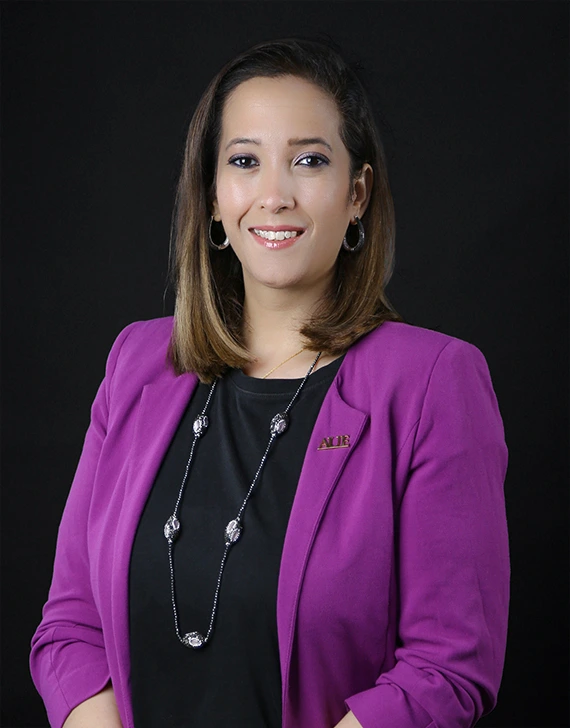
Dr. Hala Bukhari
Assistant Professor / Department Chair of the Bachelor of Education - Special Education / Acting Department Chair - General Education
ATTENDANCE
Weekday Morning Classes
MON – WED | BETWEEN 9:00 AM – 4:00 PM
Weekday Evening Classes
MON – WED | BETWEEN 4:00 PM – 9:00 PM